
inside the amx atelier
Inside the AMX Atelier: How a Carbon Fiber Seat Shell is Born
Go inside the AMX atelier to discover the precise craftsmanship behind our carbon fiber seat shells. See how advanced engineering meets art in this exclusive look.
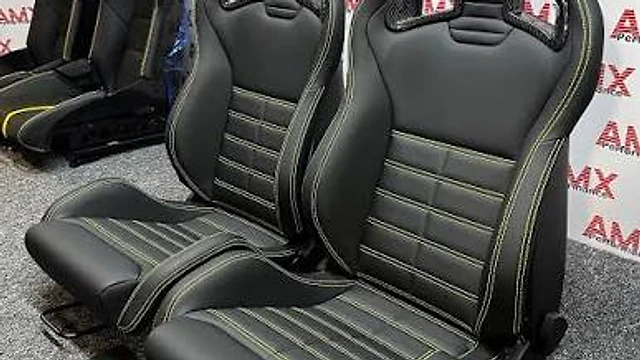
What Inside the AMX Atelier Involves
The Intersection of Precision Engineering and Artisanal Craft
To step inside the AMX atelier is to witness the meticulous convergence of aerospace-grade material science and traditional upholstery mastery. Our process begins with the structural foundation: the carbon fiber shell. We utilize high-modulus, pre-impregnated carbon weave, cured in pressurized autoclaves at exact temperatures to ensure an optimal resin-to-fiber ratio. This achieves a superior strength-to-weight profile, vital for meeting FIA-standard torsional rigidity while maintaining a chassis-weight advantage.
Every seat is engineered to balance ergonomic support with extreme lateral retention. Our technicians analyze 3D-scanned occupant metrics to define the shell’s curvature, ensuring a seat width that accommodates high-G cornering without compromising driver fatigue over endurance stints. Once the skeleton is finalized, the transformation transitions into the upholstery suite:
- Materials: We exclusively source automotive-grade Nappa leather for its tensile durability and high-performance Alcantara for its superior friction coefficient.
- Stitching: Every seam utilizes high-denier, heat-resistant thread, double-stitched at precise intervals to prevent structural failure under load.
- Finishing: High-density, closed-cell foam inserts are CNC-cut to precise depths, providing impact attenuation that meets rigorous safety benchmarks.
Inside the AMX atelier, trade-offs are non-existent. We prioritize heat dissipation through calculated ventilation channels and structural damping, ensuring each bespoke unit provides the tactile feedback a professional pilot demands. It is this marriage of rigid composite architecture and supple, hand-stitched hides that defines the pinnacle of automotive seating, turning every bespoke commission into a singular piece of performance art.
Materials: Nappa Leather, Alcantara & Technical Fabrics
The tactile connection between driver and machine is defined by the cockpit’s materiality. Inside the AMX atelier, we treat upholstery as a performance engineering challenge rather than mere aesthetics. Our material palette is curated for durability, heat dissipation, and friction management under high-G lateral forces.
Premium Upholstery Selection
- Nappa Leather: We exclusively source full-grain, chrome-free Nappa. At a thickness of 1.0mm to 1.2mm, it offers the ideal balance of tensile strength and suppleness. It is vacuum-sealed to the foam bolsters to prevent wrinkles during high-speed cornering.
- Alcantara: Engineered for superior grip, our genuine Alcantara is preferred for contact patches. It provides a higher coefficient of friction than leather, essential for stabilizing the driver’s body. Its inherently breathable, non-slip nature makes it ideal for back and seat cushion inserts.
- Technical Fabrics: For endurance racing applications, we integrate 3D spacer meshes and fire-retardant Nomex-backed textiles. These materials facilitate airflow, reducing moisture buildup—a critical factor in maintaining focus during long-stint racing.
Every hide undergoes rigorous stress testing to ensure consistent grain density, while our Alcantara is sourced to meet ISO 3795 flammability standards. We meticulously map each seat’s topography to ensure that stitching seams never intersect with high-pressure points, preventing driver fatigue. By pairing aerospace-grade carbon shells with these high-performance coverings, we create a haptic interface that communicates every subtle vibration of the chassis directly to the driver with precision and luxury.
The Build Process Step by Step
When you step inside the AMX atelier, the transformation of raw materials into structural masterpieces is a masterclass in engineering. Every bespoke seat begins as a precision-cut stack of aerospace-grade pre-preg carbon fiber, meticulously laid into CNC-machined aluminum molds by hand to ensure optimal fiber orientation for maximum torsional rigidity.
From Vacuum to Track-Ready
- Lamination: We utilize a multi-axial weave configuration, balancing weight savings with the lateral G-force requirements of track-day enthusiasts.
- Autoclave Curing: The shells undergo a 120°C high-pressure cycle for four hours, eliminating microscopic air pockets that compromise structural integrity.
- Refinement: Post-curing, the shell is trimmed to a tolerance of +/- 0.5mm, ensuring a seamless interface with our ergonomic Nappa leather or Alcantara upholstery systems.
The trade-off between ultra-lightweight construction and crash safety standards is a challenge we overcome through rigorous FEA (Finite Element Analysis) simulation. Before any shell receives our signature branding, it must survive stress-load testing simulating extreme impact forces. By maintaining a thickness profile that varies precisely based on load zones—reinforcing mounting points while thinning non-structural areas—we achieve a seat that weighs under 5kg while exceeding industry safety benchmarks. This obsessive attention to detail inside the AMX atelier is what bridges the gap between high-performance racing utility and boutique luxury aesthetics. Every layer added and every gram removed serves a singular purpose: delivering the perfect synergy of support, feedback, and uncompromised safety for the most demanding drivers on the circuit.
Durability, Climate & Care
Engineering for Extreme Environments
At AMX Performance, we recognize that a performance seat is only as valuable as its longevity under thermal stress. Inside the AMX atelier, every carbon fiber shell undergoes rigorous structural validation, ensuring the resin matrix retains its rigidity from -20°C to +80°C. By utilizing high-Tg (glass transition temperature) epoxy systems, our shells prevent de-lamination or softening, even when a track-bound cabin reaches blistering midday temperatures.
Preserving the Bespoke Finish
The marriage of premium Nappa leather and Alcantara requires a disciplined maintenance approach to preserve the material’s structural integrity and aesthetic depth. We recommend owners adhere to the following maintenance standards to maximize the lifespan of these high-performance textiles:
- Alcantara Maintenance: Utilize a soft-bristled brush to remove particulate debris from the micro-fiber pile, preventing premature matting. Avoid high-pH cleaners that can compromise the synthetic suede’s flame-retardant properties.
- Nappa Leather Conditioning: Apply water-based conditioners every six months to maintain the hide’s natural oils. This prevents the microscopic fissures that occur when high-UV exposure causes natural desiccation.
- Moisture Management: During extended storage, maintain humidity levels between 40% and 60%. Excessive dryness promotes leather cracking, while humidity above 70% threatens the adhesive bond between the upholstery and the carbon substrate.
By respecting these technical tolerances, you ensure that your investment maintains its structural precision and tactile brilliance. At AMX, we build for the elite enthusiast who demands that form never compromises function, regardless of the operating environment.
Costs, Timelines & Choosing the Right Shop
Commissioning a bespoke seat is an investment in both ergonomics and structural safety. When looking inside the AMX atelier, you are paying for more than just aesthetics; you are funding the meticulous layup of aerospace-grade pre-preg carbon fiber, vacuum-bagged and autoclave-cured at precise temperatures to achieve an ideal resin-to-fiber ratio. This process maximizes stiffness-to-weight ratios that mass-produced FRP alternatives simply cannot match.
Investment Factors
- Materials: Premium finishes like perforated Nappa leather or high-grip Alcantara involve extensive upholstery labor to maintain tension across complex compound curves.
- Compliance: Engineering seats to meet FIA 8855-1999 or 8862-2009 standards requires rigorous destructive testing, which is factored into the total cost.
- Timeline: Expect an 8 to 12-week lead time. This window accounts for CNC-machined mold preparation, precision carbon curing, and multi-stage manual trimming.
Selecting Your Builder
When vetting a seat manufacturer, look beyond surface-level trim. Demand transparency regarding structural integrity and mounting points. Does the shop utilize titanium reinforcement inserts? Are the shell dimensions optimized for your specific cockpit geometry or cage clearance? A professional builder should offer a consultation regarding your seating position—measured from the hip point (H-point) to the steering wheel plane. If a shop prioritizes quick turnarounds over structural validation, look elsewhere. Bespoke performance should never compromise on the mechanical interface between driver and machine. At AMX, we prioritize repeatable precision, ensuring every shell is track-ready upon delivery.
Frequently Asked Questions
What materials define an AMX seat?
When you step inside the AMX atelier, you will find only aerospace-grade materials. Our shells are constructed from high-modulus, pre-impregnated carbon fiber, cured in an industrial autoclave to ensure zero voids and optimal resin-to-fiber ratios. For upholstery, we exclusively utilize top-grain Nappa leather and genuine Alcantara, chosen for their superior breathability, thermal stability, and friction coefficient, which keeps the driver planted during high-G lateral cornering.
Do your seats meet racing safety certifications?
Safety is the foundation of our engineering. While our bespoke seats are crafted for aesthetic perfection, our structural designs are engineered to exceed FIA 8855-1999 standards. This rigorous testing involves 40G impact simulation, ensuring the carbon monocoque shell maintains structural integrity under extreme torsional loads.
How do you customize fitment for individual drivers?
- Ergonomic Mapping: We adjust the lumbar curvature and lateral bolster width to match your specific biomechanical profile.
- Weight Reduction: By manipulating the carbon fiber layup schedule, we can shave weight while maintaining rigidity.
- Mounting Interfaces: Our shells feature universal side-mount hole patterns compatible with most aftermarket sliding rails and fixed-position seat brackets.
What is the typical lead time for a bespoke build?
Each seat requires approximately 120 man-hours of precision labor. From the initial resin infusion process to the final hand-stitched upholstery detail, we prioritize quality over volume. A typical build cycle averages six to eight weeks, ensuring every carbon weave alignment and stitch tension meets our exacting atelier standards.