
alcantara racing seats
Alcantara Racing Seats: Grip, Weight & Heat Resistance
Discover why alcantara racing seats are the ultimate upgrade for your vehicle. Explore the perfect blend of superior grip, lightweight design, and heat resistance.
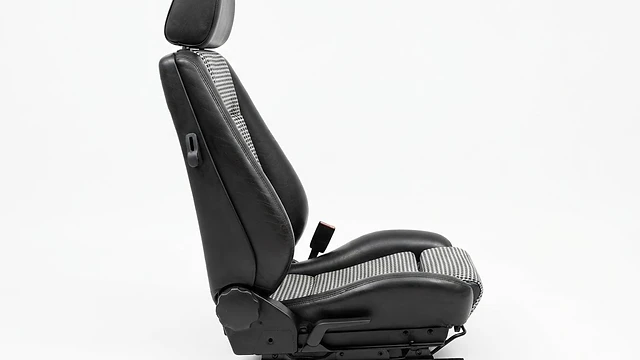
Why Alcantara for racing seats
When engineering high-performance cockpits, material selection is as critical as chassis geometry. Alcantara racing seats have become the gold standard for competitive drivers, primarily due to the material’s unique surface morphology. Unlike smooth-grain leather, Alcantara is a synthetic microfiber composite offering a high friction coefficient, which provides superior lateral grip during high-G cornering.
Technical Performance Advantages
- Thermal Regulation: Alcantara features a porous structure that facilitates breathability. It does not heat up significantly under direct sunlight, nor does it lose suppleness in extreme cold, ensuring a consistent tactile interface during endurance events.
- Weight Reduction: As a lightweight polyester-polyurethane blend, Alcantara helps minimize unsprung cockpit weight. When bonded to our signature autoclave-cured carbon fiber shells, it allows for a lower center of gravity compared to traditional, heavy bovine hides.
- Structural Integrity: The material is highly resistant to abrasion and tension, meeting strict ISO/TS 16949 automotive standards. It maintains its structural integrity even when subjected to the vibration frequencies typical of a race-tuned engine.
The primary trade-off with Alcantara is its maintenance requirement. Because it is a microfiber rather than a finished hide, it necessitates specialized cleaning to prevent the compression of the fibers—commonly referred to as "pilling." However, for professional drivers, the trade-off is negligible compared to the advantage of locked-in stability. By maximizing body-to-seat contact and minimizing sliding, Alcantara racing seats allow the driver to focus exclusively on steering inputs and braking modulation. At AMX Performance, we utilize specific density foams beneath the Alcantara to ensure optimal pressure distribution across the pilot’s lumbar and thoracic regions.
Alcantara vs leather for motorsport
When selecting the cockpit interface for high-performance builds, the choice between traditional hides and synthetic suede is fundamental. At AMX Performance, we frequently compare these materials based on their kinetic friction, thermal regulation, and weight-to-tensile strength ratios.
The Performance Advantage
Leather offers unmatched durability and ease of cleaning, making it the industry standard for daily-driven luxury vehicles. However, in a racing environment, the surface of polished leather becomes slick under high G-loads, requiring the driver to expend extra core energy to maintain position. This is where alcantara racing seats excel. Alcantara is a composite material comprising approximately 68% polyester and 32% polyurethane, providing a micro-textured surface that increases the coefficient of friction against Nomex racing suits.
- Thermal Management: Unlike leather, which absorbs radiant heat and becomes uncomfortable in high-sun exposure, Alcantara remains breathable and thermally neutral, reducing perspiration during endurance stints.
- Weight Optimization: In bespoke racing builds where every gram counts, Alcantara offers a weight-saving advantage over premium full-grain leathers, which are significantly denser.
- Structural Integrity: While leather can stretch over time under extreme lateral stress, Alcantara maintains its dimensional stability, ensuring the seat bolsters retain their factory-specified ergonomic geometry longer.
For professional motorsport applications, the trade-off is maintenance; Alcantara requires specific care to prevent matting. Yet, for drivers prioritizing tactile feedback and stability, the enhanced grip provided by alcantara racing seats is technically superior. By utilizing carbon fiber shells finished in this synthetic suede, AMX Performance ensures that the driver remains anchored, allowing for precise inputs and reduced physical fatigue during track-intensive sessions.
Grip and breathability on track
When operating at the ragged edge of performance, the interface between driver and chassis is paramount. Alcantara racing seats offer a distinct biomechanical advantage over traditional leather or vinyl surfaces due to their unique synthetic microfiber composition. Unlike smooth leather, which requires the driver to exert more muscular tension to counter lateral G-forces, the high-friction coefficient of Alcantara acts as a mechanical anchor, locking the pilot into the seat bolster.
Thermal Dynamics and Friction
The technical superiority of Alcantara lies in its complex, non-woven structure. While leather tends to become slick when exposed to perspiration, Alcantara’s porous surface facilitates moisture wicking. This breathability is essential for maintaining core temperature regulation during high-intensity sessions.
- Surface Texture: The multi-directional fibers provide multidimensional friction, preventing micro-sliding during aggressive steering inputs.
- Thermal Conductance: Alcantara possesses lower thermal conductivity than synthetic leathers, ensuring the seat surface remains neutral even in extreme cockpit temperatures.
- Weight Efficiency: By utilizing Alcantara over heavy, perforated leather hides, AMX Performance reduces overall unsprung weight without compromising the FIA-standard structural integrity of the carbon fiber shell.
Beyond the surface properties, the ergonomic design of our seats is calibrated to work in tandem with the material’s natural grip. By maintaining stable posture through corners, the driver experiences reduced fatigue and improved telemetry accuracy. For endurance racing, where every millisecond counts, the tactile feedback provided by Alcantara—coupled with its superior airflow characteristics—transforms the seat from a passive component into a high-performance instrument that enhances human-machine synergy on the track.
Caring for and cleaning Alcantara
Maintaining the premium aesthetic and functional grip of your AMX Performance alcantara racing seats requires a disciplined approach. Unlike automotive leather, which relies on a protective topcoat, Alcantara is a sophisticated synthetic microfiber composite—a blend of polyester and polyurethane—engineered for high-friction performance. Because its microscopic fiber structure can trap oils and microscopic debris, regular maintenance is essential to prevent fiber matting.
Routine Maintenance Protocols
- Surface Dusting: Weekly, use a soft-bristled brush or a vacuum with a delicate upholstery attachment to lift dust. Avoid aggressive brushing, which can prematurely fray the fibers.
- Chemical Selection: Never use industrial solvents, harsh bleaches, or standard leather conditioners. These compromise the integrity of the Alcantara’s flame-retardant backing. Instead, utilize a pH-neutral, water-based foaming cleaner specifically formulated for microfibers.
- Cleaning Technique: Apply the solution to a clean white microfiber cloth—never directly to the seat surface—and gently dab the affected area. Always work from the outside of a stain toward the center to prevent saturation.
For deep cleaning, after gently rubbing the surface, allow it to air dry completely. Once dry, use a soft brush to restore the "nap" or texture of the material. This restorative step is vital for ensuring the tactile grip necessary for high-speed cornering. By strictly adhering to these care standards, you preserve the structural integrity of the carbon fiber frame beneath and the luxurious finish above, ensuring your bespoke alcantara racing seats remain in concours condition throughout their high-performance service life.
Pairing Alcantara with carbon shells
The marriage of a structural carbon fiber monocoque with high-grade synthetic suede is the gold standard in modern automotive interior engineering. When constructing alcantara racing seats, we prioritize the symbiotic relationship between the rigid, vacuum-infused carbon shell and the tactile, high-friction properties of the upholstery. This pairing is not merely an aesthetic choice; it is a calculated performance upgrade.
Material Synergy and Structural Integrity
Carbon fiber provides an unparalleled strength-to-weight ratio, with shells typically weighing under 4.5kg per unit. However, carbon lacks inherent thermal regulation. Alcantara addresses this by acting as a breathable, moisture-wicking barrier between the driver and the composite material. This prevents the "hot seat" effect common in pure track applications while maintaining the extreme rigidity required for FIA-homologated lateral support.
- Weight Optimization: By using precision-bonded Alcantara rather than heavy leather, we shave an additional 200–400 grams per seat without sacrificing durability.
- Thermal Management: Alcantara features high porosity, allowing for rapid dissipation of cabin heat, which is essential when the carbon shell acts as a heat sink.
- Surface Coefficient: The micro-fiber structure provides a higher coefficient of friction than smooth hide, effectively "locking" the driver’s racing suit into the carbon shell during high-G cornering maneuvers.
When selecting your configuration, consider the weave of the carbon fiber (typically 3K twill) alongside the GSM weight of the Alcantara. A heavier-duty 600g/m² Alcantara is recommended for the bolsters, where abrasion risk is highest, while a thinner, 400g/m² variant on the backrest minimizes thickness, ensuring the seat remains compliant with tight cabin dimensions in dedicated track-day builds.